31 Most Famous Ziyarat Places to Visit in Mecca
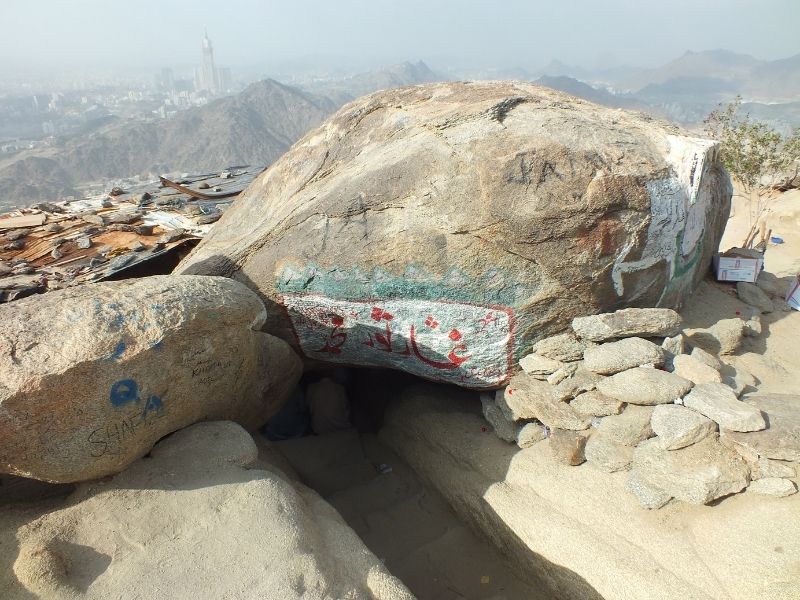
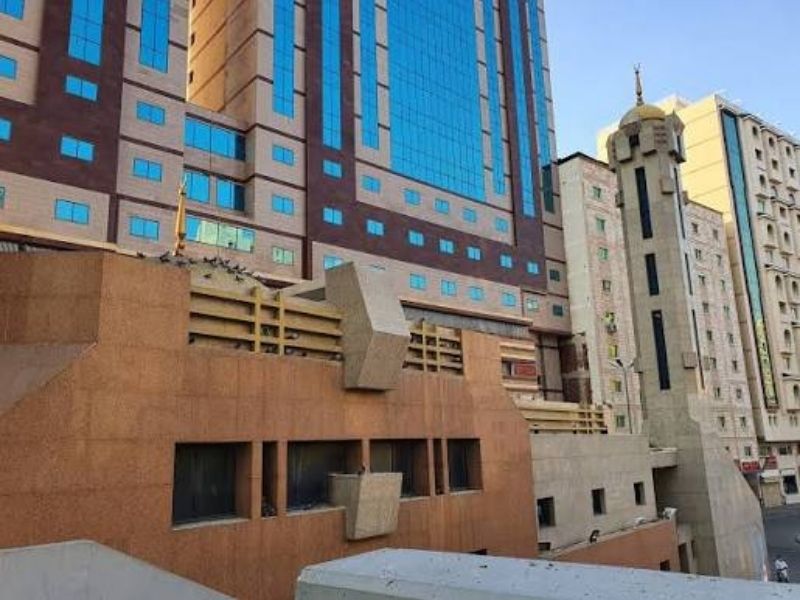
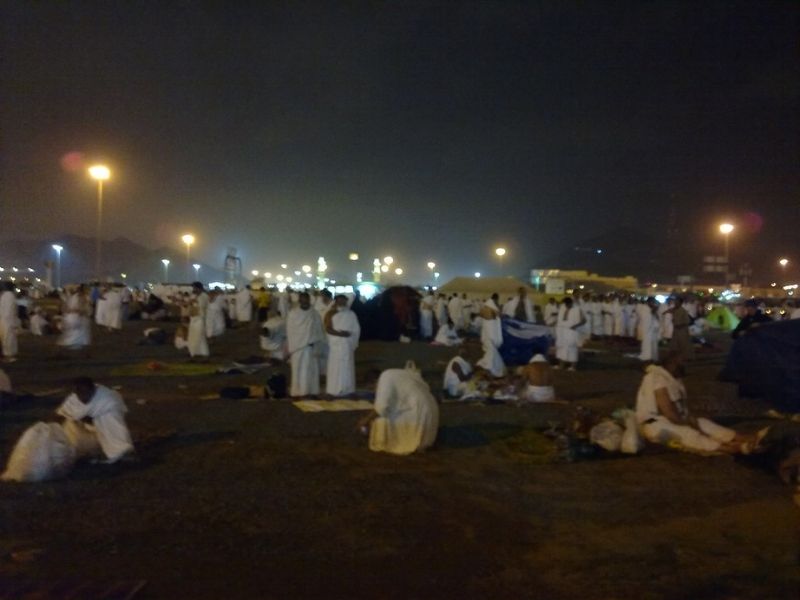
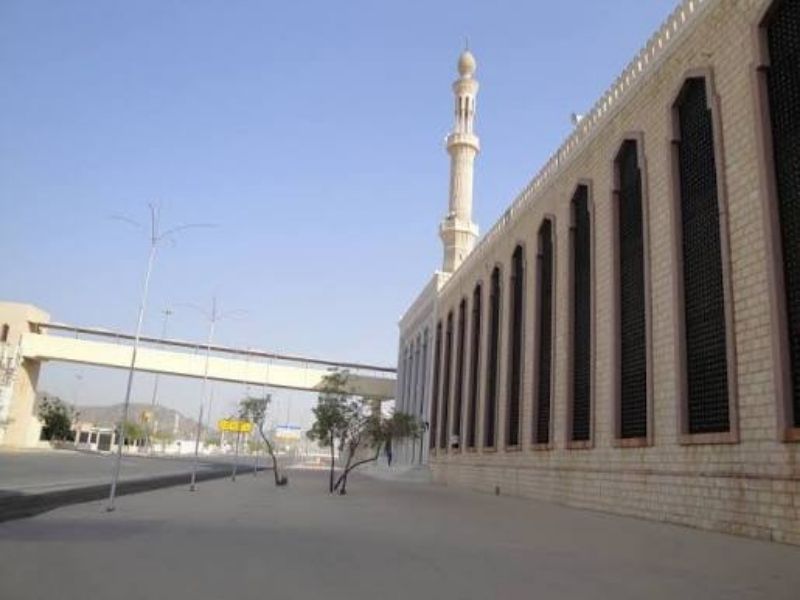
The ziyarat places of Makkah covered in this guide.
On the eastern side of the Grand Mosque there is a plain library building. Doors shut, nothing written on it that helps you. Prophet Muhammad was born on that spot, and most of the pilgrims we carry past it every day never learn that.
Makkah keeps its history like that. Some sites are lit and signposted, others were built over on purpose, and nobody tells you which is which until you have already paid a driver to take you there and arrived at a car park.
I live in Saudi Arabia and run Hujjaj Umrah Taxi under Al Harbi Transport, which means I have walked and mapped these routes far more often than my own umrah and hajj visits called for. What follows is all 31 ziyarat sites in the order I would send you, grouped by direction out of the city, with the distance from the Haram in every heading and one honest line on what remains on the ground.
Start with the five you can reach before hiring anybody.
Inside Masjid al-Haram (walking)
1. Masjid al-Haram and the Holy Kaaba 0 km

Masjid al-Haram is the largest mosque in the world and holds over two million worshippers at capacity. That figure stays abstract until you try to find your family members after Fajr, so pick a gate, memorise its number, and say it out loud to everyone you came with.
At the centre stands the Kaaba, the holiest site in Islam and the direction of your daily prayers wherever you live. Prophet Ibrahim and his son Ismail built it.
Hold on to that name, because Ibrahim connects almost everything below.
2. Maqam Ibrahim 0 km
A few metres from the Kaaba sits a small gold and glass structure holding the stone Ibrahim stood on to raise the walls, his footprints still pressed into it.
You pray two rak’ah behind it after tawaf. At peak hours the guards keep everyone moving, so pray from further back rather than fighting for the glass.
3. Zamzam Well 0 km
Before those walls went up, Hagar was left in this dry valley with her infant son Ismail and no water. Allah gave her the Well of Zamzam, and the sacred water source has never run dry since.
You cannot see the well. The shaft was sealed below the tawaf floor years ago and the water reaches you through coolers around the mosque.
What you can still walk is the route Hagar took while searching.
4. Safa and Marwah 0 km
Safa and Marwah are two small hills located inside the mosque, now joined by a marble corridor. Hagar ran between them seven times looking for help.
Pilgrims repeat that route in the ritual walk called Sa’i, roughly 45 minutes at a steady pace. Travelling with elderly relatives, use the wheelchair lanes on the upper floor.
5. Dar al-Arqam 0 km
On the slope of Safa stood the house of Arqam ibn Abi al-Arqam, where early Muslims met in secret when praying openly was dangerous, and where Umar accepted Islam.
The expansion absorbed it long ago. You walked over the site during Sa’i without knowing, which makes it the first of several places you will visit only in your imagination.
Three more are close enough to reach on foot.
The old city, on foot
6. Traditional birthplace of Prophet Muhammad ﷺ 500 m
The library from the opening of this guide, built over the house in Suq al-Layl where the Prophet was born.
Nothing to touch, nothing to circle, doors usually locked. Stand outside for a minute. The value is knowing what the ground under you carried.
7. Shi’b Banu Hashim 1 km
Ten minutes north is the narrow valley where the Prophet’s clan was shut in for three years during the boycott, food cut off and children going hungry.
Roads and apartment blocks fill the valley floor now, so there is nothing unusual to see. You will drive through Hujun on your way to the cemetery anyway, and knowing this changes that drive.
8. Jabal Abu Qubays adjacent
Look east from the courtyard. The hill directly above you is Jabal Abu Qubays, and islamic tradition holds that the splitting of the moon was witnessed from its summit.
A royal palace occupies the top and the public cannot go up. A glance from below costs you nothing and is as close as anyone gets.
For everything after this you need a car. Take the road north first, because four sites sit within two kilometres of each other.
North of the Haram
9. Jannat al-Mu’alla 1 km
Jannat al-Mu’alla is one of the oldest cemeteries in Mecca and the final resting place of close family members of the Prophet, including his first wife Khadijah, along with the tombs of early islamic figures.
Expect unmarked gravel, not headstones. Make dua from the path, keep your voice down, and leave your phone in your pocket, because photography is not welcome.
Of every stop on this list, this is the one our passengers still mention months after they fly home.
10. Masjid al-Jinn 1 km
Directly opposite the cemetery, this small mosque marks where a group of jinn listened to the Prophet reciting the Quran.
Time your arrival for a prayer and you get more from it. Otherwise ten minutes is enough and your driver can wait outside.
11. Masjid al-Rayah 1.5 km
Two minutes further on, this mosque marks where the Prophet planted his banner during the conquest of Makkah. Rayah means banner.
There is no large sign to spot from the road, so give your driver the name before you set off.
12. Masjid al-Ijabah 2 km
The last of the northern cluster, in Ma’abdah, linked to a dua the Prophet made and the answer he was given. Ijabah means response.
Like Masjid al-Rayah it is small and working rather than grand. Treat both as short stops on the same loop.
Turn west and there is one more well before the mountains.
West of the Haram
13. Bi’r Tuwa 2 km
In Jarwal sits a well most ziyarat routes leave out. The Prophet camped here and bathed before entering Makkah during the conquest, and travellers copied him for centuries.
It is preserved inside a walled enclosure and takes five minutes. Fold it into the drive out to Masjid Aisha rather than making a separate trip.
The two mountains
Both climbs are serious and neither works in the middle of the day.
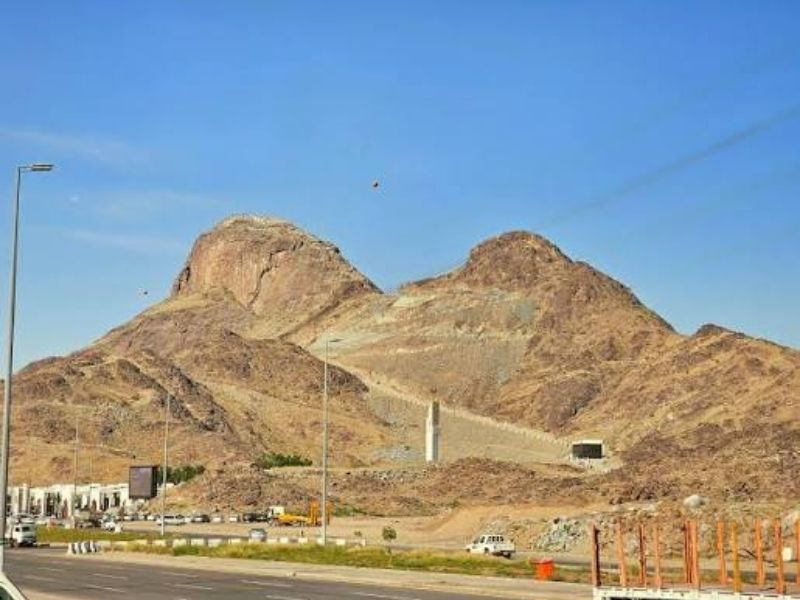
14. Jabal al-Nour and the Cave of Hira 5 km
Jabal al-Nour rises on the north-eastern edge of the city and is named for light. Jabal Al Nour is where Muhammad received Quran revelations.
Near the summit is the Cave of Hira, a gap in the rock where the Prophet sat alone and where he received his first revelation, brought by the angel Gabriel.
Be honest about your knees. The climb runs well over an hour on uneven steps with no shade, so go before sunrise or after Asr and carry more water than you think you need, and a driver who waits at the base makes the timing easy. Turn back halfway and you still get the whole city below you.
15. Jabal Thawr and the Cave of Thawr 4 km
South of the city stands the second mountain of the same story. Jabal Thawr is where Prophet Muhammad and Abu Bakr sought refuge during their migration to Medina, hiding three nights while search parties passed below.
This climb is harder than Jabal al-Nour and the cave mouth is a tight squeeze. Plenty of pilgrims stop at the base, look up and read the story from there, and I tell our ziyarat drivers to park and wait without a word about it.
Come down and the next stops are boundaries and battlegrounds rather than monuments.
The miqat and treaty sites
These four sit outside the Haram boundary, on the roads leading into the city.
16. Masjid Aisha at Al-Tan’im 7 km
Masjid Aisha marks the boundary where residents and visitors enter the state of Ihram for umrah. Want a second umrah pilgrimage during your stay, you come here first, and our ziyarat taxi ends its loop here for exactly that reason.
Taxis run all night and there are changing rooms on both the men’s and women’s sides, which makes a 2 am umrah far easier than it sounds.
17. Masjid al-Ji’ranah 22 km
Your second miqat option, north-east on the Ta’if road, where the Prophet entered ihram after the campaign at Hunayn.
Quieter than Tan’im and much further out. Choose it only if you are already heading that way.
18. Al-Hudaybiyah 22 km
West on the old Jeddah road is the ground where the treaty with Quraysh was agreed, the agreement that opened the way for the conquest two years later.
An old mosque and a well on open, plain land. The weight of this place is entirely in what you know before you arrive.
19. Hunayn Valley 30 km
Further up the Ta’if road lies the valley where the battle was fought soon after the conquest. The Quran names it directly.
Forty minutes each way through empty country with little to see on the ground. Go if the islamic history is why you came, skip it without guilt if your days are short.
Head east instead and the road runs through the three places every pilgrim passes in fixed order during the annual hajj pilgrimage. Outside the season they stand empty, which is the best time to see them.
The Hajj route: Mina, Muzdalifah and Arafat
20. Mina 8 km
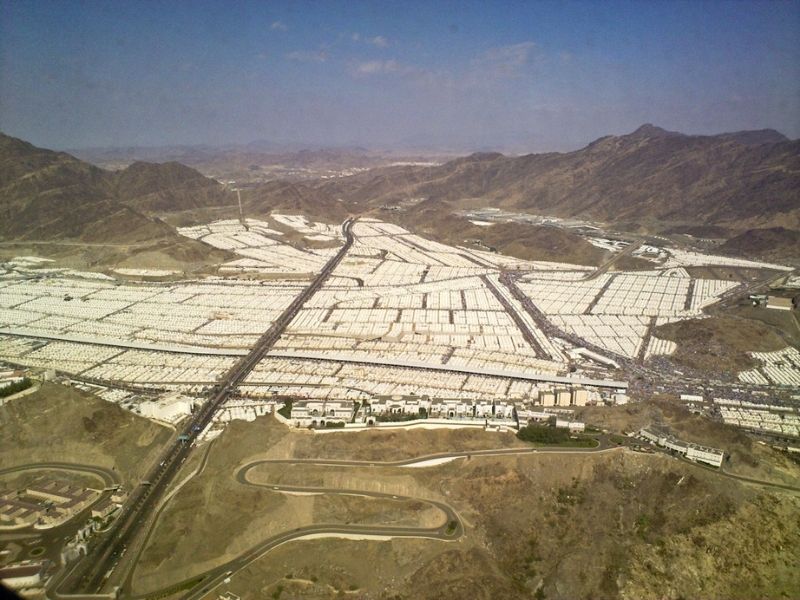
Mina is a key site for hajj rituals and your first stop on this road, included in every Makkah ziyarat taxi loop we run. White fireproof tents cover the valley for kilometres and sit empty most of the year.
21. Masjid al-Khayf 8 km
The main mosque of Mina, where the Prophet prayed during his hajj. Out of season you may have a mosque built for a crowd of thousands entirely to yourself.
22. Masjid al-Bay’ah 8 km
Close to the Jamarat, marking where the men of Madinah gave the Prophet their pledge before the migration. That pledge is why Madinah became the city it did.
23. The Jamarat 8 km
The three pillars where pilgrims perform the stoning, now built into a multi-level bridge designed to move millions safely. Stand on an empty level and you understand what hajj season asks of this city.
24. Muzdalifah 12 km
Open ground between Mina and Arafat where pilgrims sleep under the sky and collect pebbles for the next day. No tents, and that absence is the point.
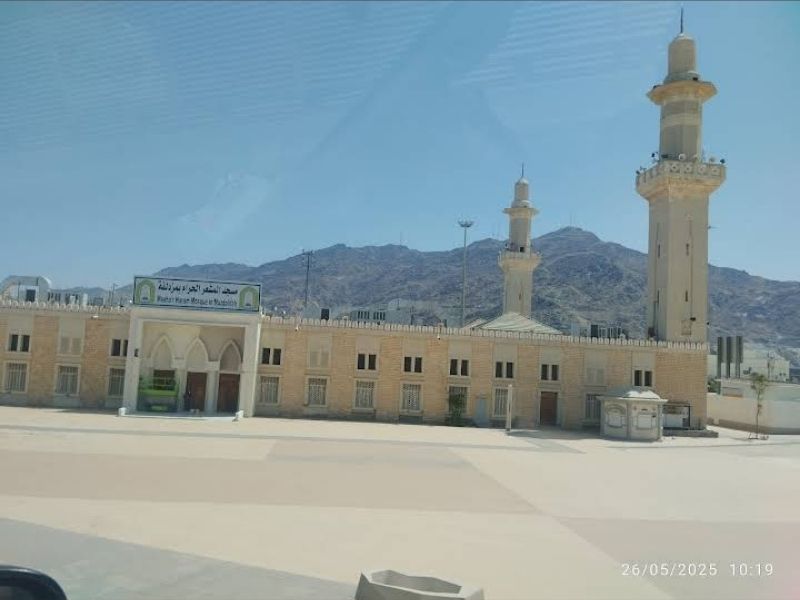
25. Masjid al-Mash’ar al-Haram 12 km
The mosque at Muzdalifah stands alone on flat land, marking where the Prophet stopped to make dua. Visible from the road if you are short on time.
26. Arafat 20 km
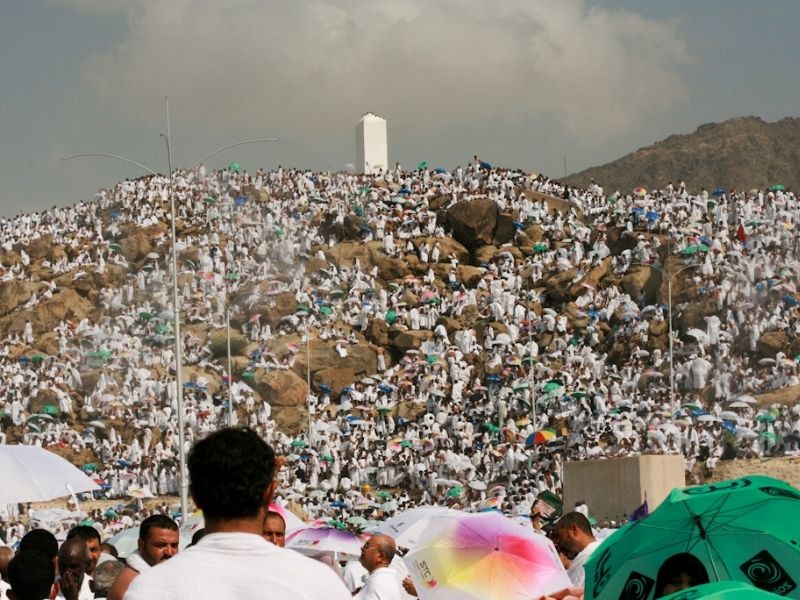
Mount Arafat is about 20 km east of Mecca on a wide plain, and standing here is crucial during the Hajj pilgrimage. Miss this day and your hajj is not valid.
27. Jabal al-Rahmah 20 km
The rocky hill with the white pillar on top, where the Prophet delivered his farewell sermon to more than a hundred thousand believers.
Outside hajj you can walk up in ten minutes with the plain to yourself. This is the stop where the spiritual significance of the whole journey finally lands for most people we bring here.
28. Masjid Namirah 20 km
At the edge of the plain stands the mosque built where that sermon was given, one of the largest in the islamic world. It opens one day a year, so you will see it from outside.
Feeding and watering crowds this size has always been the city’s real problem, and the next three sites are about exactly that.
Water, craft and modern Makkah
29. Ain Zubaida 20 km
More than a thousand years ago Zubaydah, wife of Harun al-Rashid, paid for a spring and aqueduct system to carry water into Makkah, and it supplied pilgrims for centuries.
Preserved sections sit near the Arafat road, so stop on the way back rather than driving out separately.
30. King Abdulaziz Complex for the Holy Kaaba Kiswa 10 km

At Umm al-Joud you watch the kiswa being made. Craftsmen embroider Quranic text in gold and silver thread onto black silk by hand, on frames as long as the room.
One of the few key attractions where you watch work in progress instead of reading a plaque. Ask your agent to confirm opening hours, because they change.
31. Exhibition of the Two Holy Mosques Architecture 10 km

Next door sit pieces removed from the Haram during past expansions: old doors, the original wooden staircase to the Kaaba, columns, the earlier gutter.
Nowhere else lets you stand this close to them. Allow an hour for both buildings and treat the pair as one stop.
One more stop: Abraj Al Bait Towers and the Clock Tower Museum adjacent
Back at the mosque, the Makkah Royal Clock Tower is impossible to miss. The clock towers were completed in 2012, stand 601 metres tall, and carry the largest clock face on earth.
The Clock Tower Museum occupies the top and covers astronomy and timekeeping in the islamic world, with the observation deck included in your ticket. The rest of the Abraj Al Bait complex holds hotels, a prayer hall and a mall, five minutes from the courtyard.
Two half days cover almost all 31. Take the northern cluster and one mountain on your first morning, then the hajj route and Umm al-Joud on the second.