Ziyarat guide · Madinah · updated 2026
43 Ziyarat Places to Visit in Madinah, With Distance from Masjid Nabawi
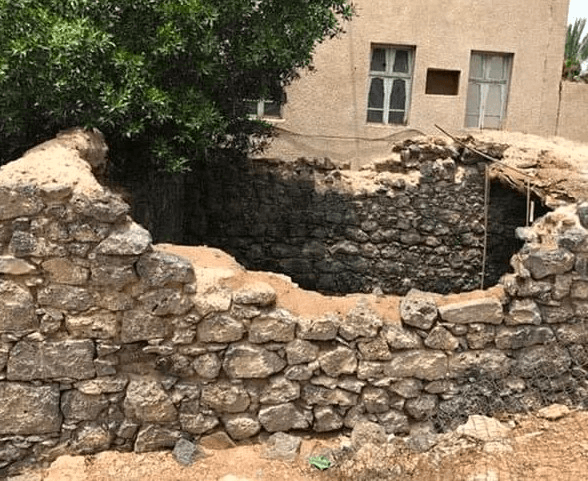
The ziyarat places of Madinah covered in this guide.
Most guides to places to visit in Madinah stop at ten sites. The city has more than forty.
I live in Saudi Arabia and run Hujjaj Umrah Taxi under Al Harbi Transport, and our drivers cover the Madinah ziyarat loop several times a week. Some of these stops are worth a whole morning. Some are a locked door and a story.
Below are all 43, the famous ones first and the lesser known ones after, with the distance from the Prophet's Mosque and one plain line on what is actually there.
Jump to:
Madinah is the second holiest city in Islam and sits in the western region of Saudi Arabia. Prophet Muhammad ﷺ arrived here in 622 CE, the year of the Hijrah and the start of the Islamic calendar. The first Islamic community and the first Islamic state were built on these streets. That is why the city holds so many sacred sites within a short drive of one another.
Start with the five you can reach without a car.
On foot from the Prophet's Mosque
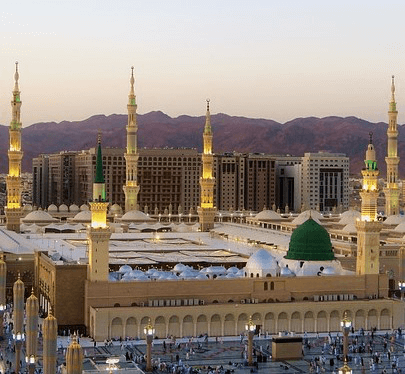
1. Al-Masjid an-Nabawi, the Prophet's Mosque
0 kmMasjid Nabawi is the second holiest mosque in Islam after Al Haram in Makkah. The Prophet ﷺ built the first version with his own hands in 622 CE, a few months after the Hijrah. One prayer here is recorded as worth a thousand elsewhere, which is why many pilgrims give the whole first day to nothing else.
The mosque is open 24 hours. The calmest time is between Isha and Fajr, when families have gone back to their hotels and the spiritual atmosphere is at its best. Fix a gate number with your group before you go in. The courtyard is enormous, and everybody looks the same in white.
2. Rawdah Mubarak
0 kmThe green carpet between the Prophet's pulpit and his house marks the Rawdah, which he described as a garden from the gardens of Paradise. Every visitor wants two rak'ah on that carpet.
You cannot walk in. Entry is by booked slot only, through the Nusuk app, and you book before you travel. Slots for Ramadan and the weeks before Hajj go within days of opening. Nobody at the door can help if you arrive without one.
3. The Prophet's ﷺ Sacred Chamber
0 kmThe Prophet ﷺ rests in the chamber that was once the room of his wife Aisha. Abu Bakr and Umar lie beside him under the same Green Dome. Men file past in a slow line. Women have set times, posted on boards near their entrances, so check them the day before.
Say your salam and keep moving. The guards do not allow anyone to stop. The whole pass takes under a minute, and it is still the moment most of our passengers talk about on the drive home.
4. Bab Al-Salam, the Gate of Peace
0 kmBab Al-Salam is the gate on the western side through which visitors approach the Sacred Chamber. It is the oldest surviving gate of the mosque and the one the Prophet's companions used.
Enter here for the visit to the grave, and you will be in the right line without asking anyone. Coming out, you are two minutes from the old city sites in section three.
5. Jannatul Baqi, Al-Baqi Cemetery
200 mCross the courtyard on the eastern side, and you are at Jannat al Baqi, the oldest Islamic cemetery in Madinah. Uthman ibn Affan is buried here, along with the Prophet's wives, his daughters, his infant son Ibrahim and thousands of companions.
Expect bare ground and small stones with no names. Men enter after Fajr and after Asr. Women make dua from outside the wall. Leave your phone in your pocket, because the guards will ask you to anyway.
From here you need a car. Go south first, because the next five sites sit within a kilometre of each other.
The Quba cluster
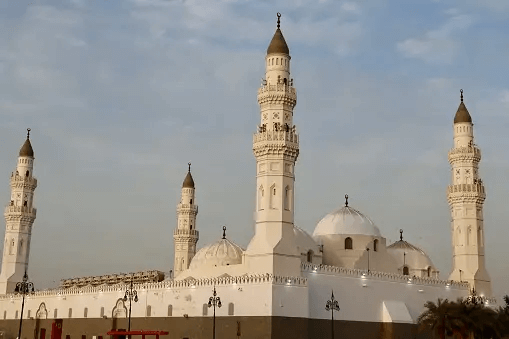
6. Masjid Quba
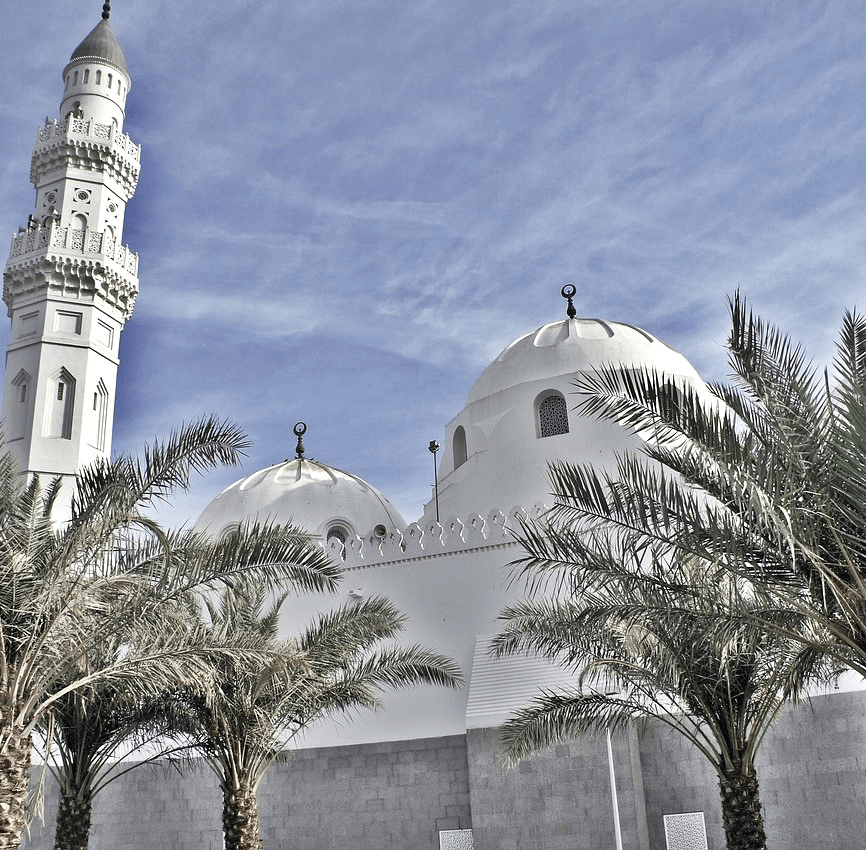
4 kmMasjid Quba is the first mosque built in Islam. The Prophet laid its foundation in 622 CE when he reached Quba, before he entered Madinah itself. The first Islamic community raised its walls with him carrying stones alongside them.
Make wudu at your hotel, come here and pray two rak'ah. The Prophet said that carries the reward of an umrah. He visited every Saturday, and pilgrims who copy the habit fill the road on Saturday mornings. The mosque is big, white and cool inside, an easy stop for older relatives.
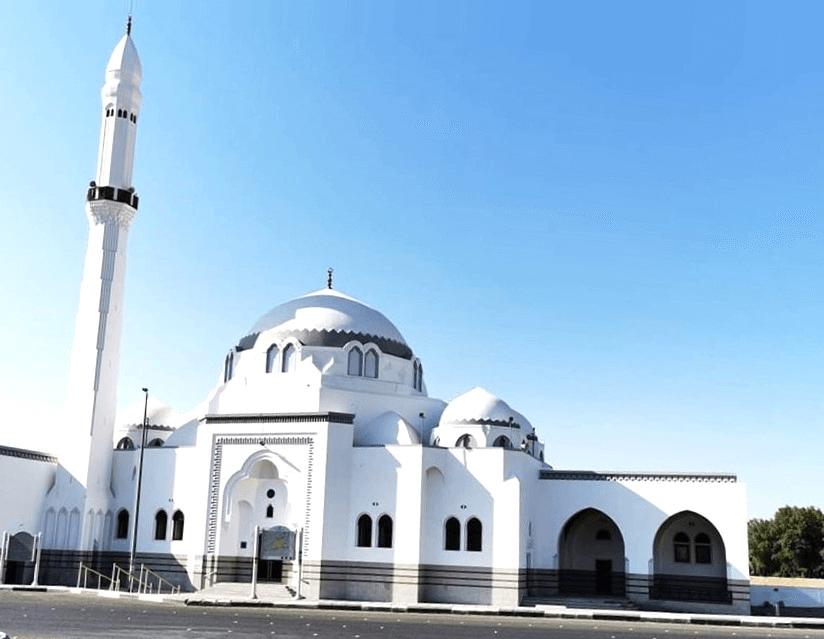
7. Masjid Al-Jumu'ah
3 kmOn the road between Quba and the centre, this mosque marks the first Friday prayer in Islamic history. The Prophet stopped here on his way into the city from Quba and led Jumu'ah in the valley.
It is a small working mosque with a car park. Ten minutes is enough unless you time it for a prayer.
8. Athq Well, Bir Athq
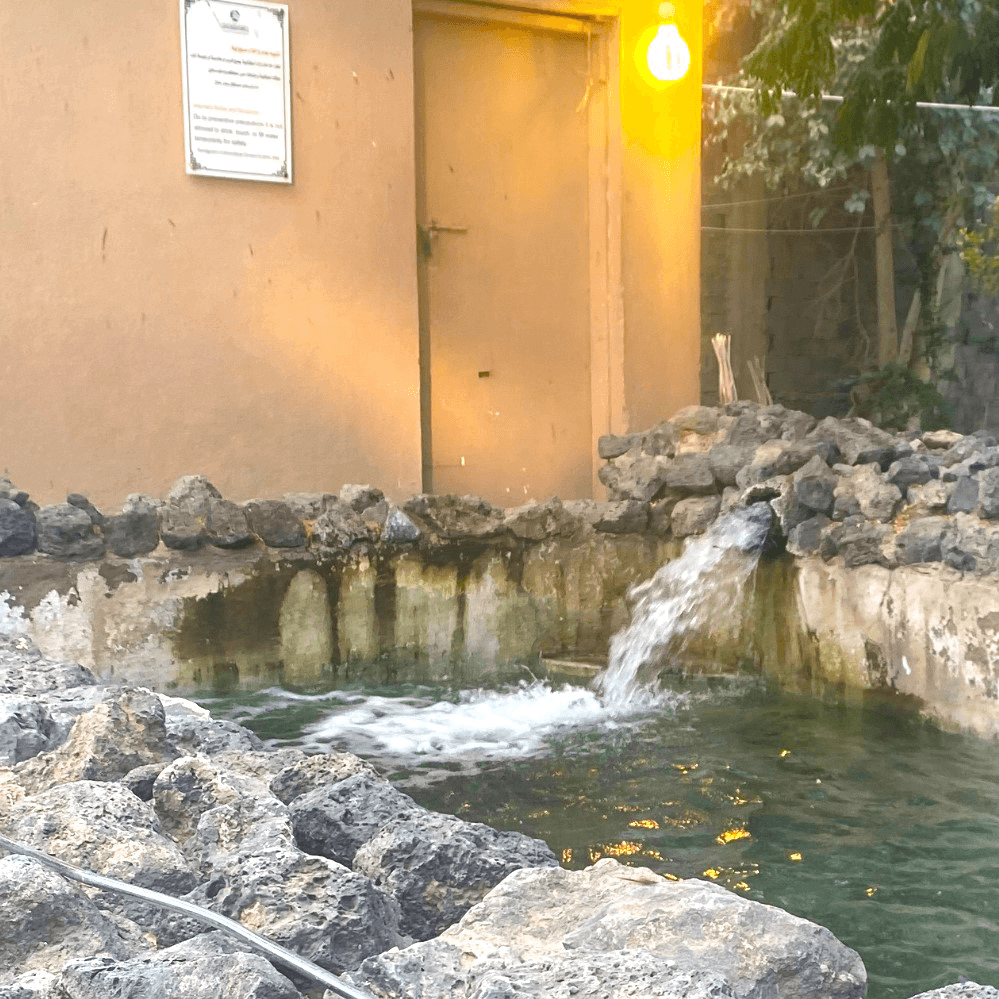
4 kmOpposite the Quba area, Athq is one of the old wells the Prophet drank from, now a developed visitor site with paths, shade and signs. You cannot draw water. You can stand at the rim and see how deep the city's water once ran.
Five minutes. It is on the way to the next stop, not a trip on its own.
9. Bir Arees, the Well of the Ring
4 kmAbout 38 metres west of Quba Mosque is Bir Arees. The Prophet's silver ring passed to Abu Bakr, then Umar, then Uthman, who dropped it into this well. Days of searching never found it.
Saudi authorities recognise the well for that story. The shaft is covered, so read the account before you arrive and give it a few minutes.
10. Masjid Banu Anif
4 kmA short walk from Quba stands the mosque of the Banu Anif clan, where the Prophet prayed when visiting the tribe. It is rebuilt and small.
Treat it as the last stop of the Quba walk, not a separate drive.
Back in the centre, six sites sit within a few hundred metres of the mosque and most pilgrims walk past them without knowing.
The old city
11. Masjid Al-Ghamama
300 mGhamama means cloud. This small white mosque south west of the courtyard marks where the Prophet led Eid prayers and, on one occasion, prayed for rain. A cloud came and the rain fell before he finished.
Twenty minutes on foot, and the next two sites are close enough to add to the same walk.
12. Masjid Al-Ijabah
1 kmIjabah means response. In the mosque of Banu Muawiyah the Prophet made three duas for his ummah. Two were answered. The third, that the ummah would never be divided, was not.
It is a working neighbourhood mosque north east of the centre. Give it ten minutes and a prayer if the timing works.
13. Masjid Al-Sajdah, Masjid Al-Shukr
1 kmNorth of the mosque, near Abu Dharr street, this mosque marks where the Prophet made a long prostration of thanks after receiving good news for his ummah. Sajdah means prostration and Shukr means thanks.
The official Visit Madinah portal lists it as a recognised site. Small, quiet, five minutes.
14. Masjid Al-Suqya
1.5 kmNear the old railway station in Anbariya, Al-Suqya marks where the Prophet camped his army on the way to Badr and made dua for Madinah's measures of grain and its water.
The mosque stands inside the station compound. Ask the gate guard and he will point you to it.
15. Al-Suqya Well
1.5 kmBeside the mosque is the well itself, one of the wells whose water the Prophet preferred. It is capped now.
Take the two together in ten minutes. The old station building next door houses the Hejaz Railway Museum, which I come back to in the practical section.
16. Saqifah Banu Sa'idah
300 mWest of the mosque, a small walled garden marks the Saqifah, the covered meeting place of Banu Sa'idah. Here, on the day the Prophet died, the companions gathered and chose Abu Bakr as the first caliph.
There is nothing to see beyond a few palms. The whole future of the Islamic state was decided on this spot, and most pilgrims sleep in a hotel above it without knowing.
The next four sites are about the year the qibla changed and the year the city was besieged.
Qiblatain and the Trench
17. Masjid Al-Qiblatain
4 kmQiblatain means two qiblas. In the second year after the Hijrah, the direction of prayer changed from Jerusalem to Makkah while the Prophet led a prayer here. The congregation turned around mid prayer.
The old mihrab facing Jerusalem was removed in the last renovation, so today only one qibla remains. Read the story before you come, because the building will not tell it.
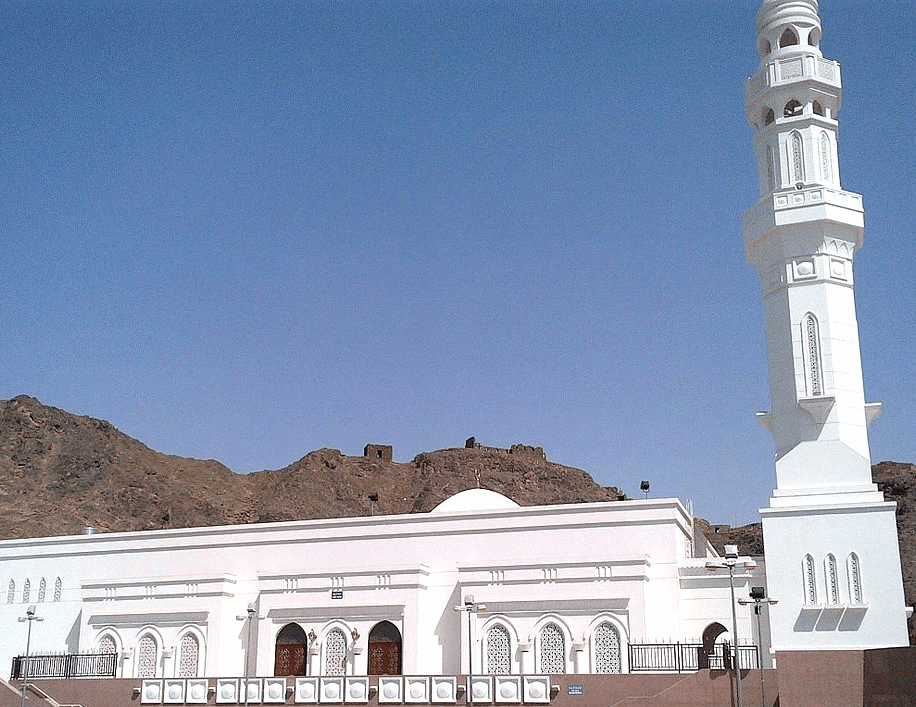
18. The Seven Mosques, Sab'u Masajid
4 kmWest of the centre stand the seven small mosques of the Battle of the Trench. In 627 CE the Muslims dug a trench across the open side of Madinah and held off a siege for a month. Each mosque marks where the Prophet or a companion prayed during those weeks.
The group includes Masjid Al-Fath, Masjid Salman Al-Farsi, Masjid Abu Bakr Al-Siddiq, Masjid Umar ibn Al-Khattab and Masjid Ali ibn Abi Talib, with two smaller sites alongside. Masjid Al-Fath is the largest and sits on the hill where the Prophet prayed for victory. Some of the smaller ones are locked. Walk the group in half an hour and have your driver wait at Al-Fath.
19. The Battle of the Trench, Khandaq Area
4 kmThe trench itself is gone under roads and housing. What remains is the line of the hills that made the plan work, visible from the car park of the Seven Mosques.
Salman Al-Farsi suggested the trench, a tactic Arabia had never seen. Stand facing north and you can see why the cavalry could not cross.
20. Jabal Sala', Mount Sela'
4 kmThe rocky hill above the Seven Mosques is Jabal Sala'. The Prophet climbed it during the siege and was shown the victories to come in Persia, Syria and Yemen.
There are steps to the top and the view covers the whole Trench area. Twenty minutes up and down, best before nine in the morning.
Turn north now. The next three stops are one battlefield.
Uhud
21. Mount Uhud, Jabal Uhud
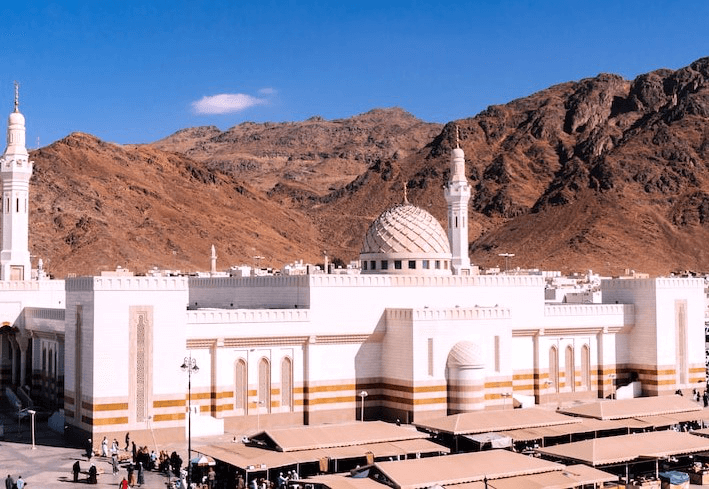
5 kmUhud is the site of the Battle of Uhud in 625 CE. The Muslims were winning until the archers left their post, and the day turned. The Prophet was wounded on this ground.
He later called Uhud a mountain that loves us and that we love. You do not need to climb it. Everything happened at the base, and the mountain only makes sense from below.
22. Martyrs of Uhud Cemetery
5 kmSeventy men who died at Uhud lie in a fenced enclosure at the foot of the mountain. Hamza ibn Abdul Muttalib, the Prophet's uncle and the strongest of the early Muslims, is among them.
Stand at the fence, make dua and move on. Sellers work the car park hard, so agree a price before anything goes into your hand.
23. Jabal Al-Rumah, the Archers' Hill
5 kmThe small red hill opposite the martyrs cemetery, also called Mount Aynayn, is where the Prophet posted fifty archers. When most of them left for the spoils, the cavalry came round behind the Muslim line.
It takes ten minutes to climb and gives you the whole battlefield in one view. Of the three Uhud stops, this is the one that makes the story real.
Those 23 are the ziyarat every taxi in Madinah knows. The next 20 are the ones most drivers have never been asked for.
Lesser-Known Ziyarat Places in Madinah
These sites are real and most are still standing. Saudi sources, including the Visit Madinah portal, list them among the city's historical mosques and wells. I include them for pilgrims on a longer stay who have already done the main loop and want to walk where the companions lived rather than only where they fought.
Mosques on the Uhud road
24. Masjid Al-Mustarah, Bani Harithah Mosque
2.5 kmThe Madinah portal identifies this as the place where the Prophet rested on his way back from Uhud. Mustarah means resting place. It still stands and is the most worthwhile stop in this whole section.
25. Masjid Al-Shaykhayn, Al-Udwah
3 kmHere the Prophet camped his army the night before Uhud and reviewed the young men who wanted to fight. Also called Al-Dur' Mosque. Small and rebuilt.
26. Masjid Al-Fasikh
5 kmAt the foot of Uhud, this mosque is linked to the day the verse forbidding wine was revealed. Companions poured away their fasikh, a date drink, on this spot. Two minutes from the martyrs cemetery.
Mosques of the old neighbourhoods
27. Masjid Banu Haram
4 kmNear Jabal Sala', in the quarter of the clan that hosted the Prophet during the Trench. The companion Jabir cooked a small meal here that fed the whole army.
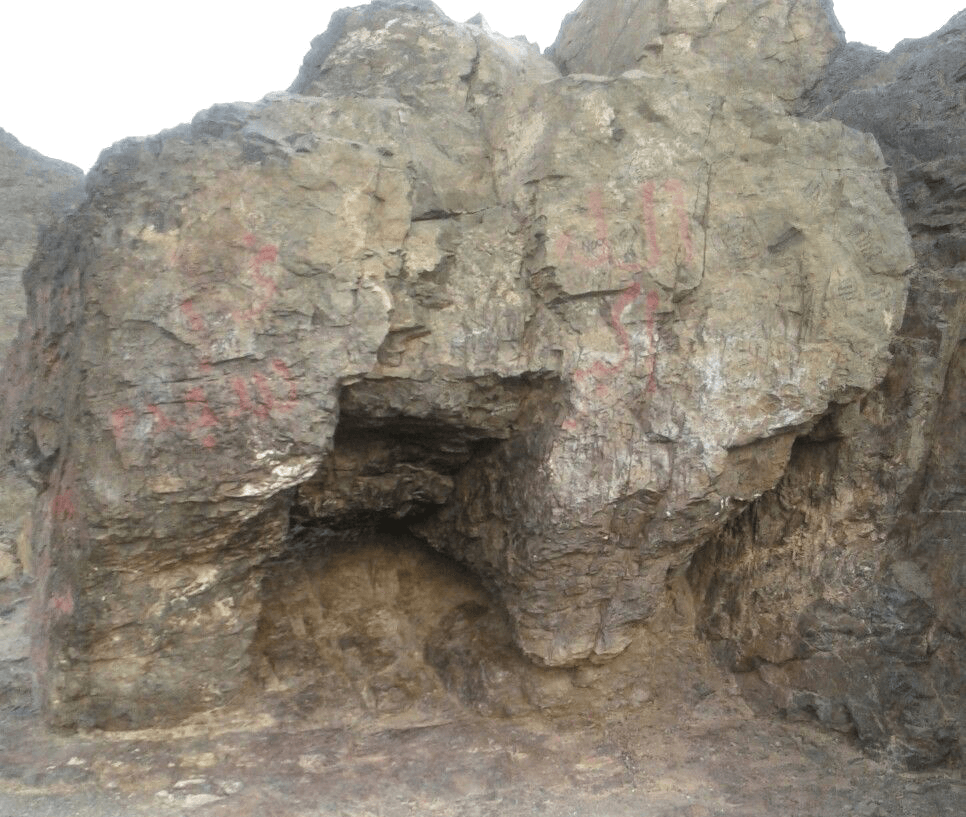
28. Masjid Al-Manaratayn, Bani Dinar Mosque
3 kmOn the Wadi Al-Aqiq road, named for its two minarets. The Prophet prayed here and a nearby stone is linked to the verse about the Prophet's ring, though accounts differ.
29. Masjid Al-Rayah
3 kmOn the hill of Dhubab, north west of the centre, where the Prophet raised his banner during the Trench. Rayah means banner. Not to be confused with the mosque of the same name in Makkah.
30. Masjid At-Tawbah
2 kmA small early mosque whose name means repentance. The story behind it is thin in the sources, so treat it as a two minute stop for completeness.
31. Masjid Al-Adna
2 kmOne of the small prayer sites of the early clans, listed as still standing. Nothing to see beyond a modest building.
32. Masjid Misbah
3 kmAnother rebuilt clan mosque of the first years. Worth a glance from the car if it is on your route.
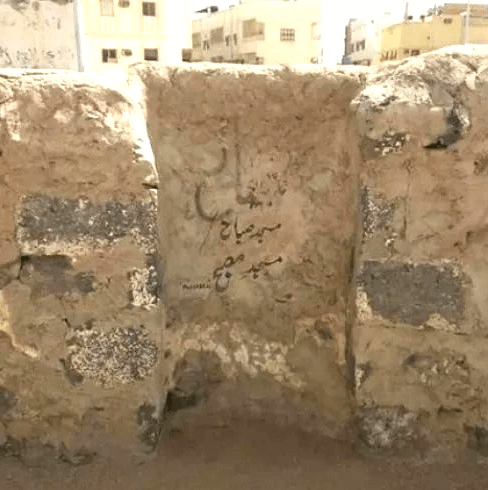
33. Masjid Banu Bayadah
3 kmThe mosque of the Banu Bayadah quarter, where the Prophet prayed when visiting the tribe.
34. Masjid Banu Khatmah
4 kmIn the Quba area, the mosque of the Banu Khatmah. The Prophet prayed here and the clan later became known for its poets. Add it to the Quba walk if you have time.
The historical wells
Madinah lived on its wells until the last century, and the Prophet drank from several of them. Visit Madinah lists these five among its visitor destinations. None of them gives water today.
35. Bir Ghars, the Well of Ghars
4 kmThe Prophet drank from Ghars and asked that his body be washed with its water. Near Quba, in a small park.
36. Bir Uthman, the Well of Rumah
4 kmUthman ibn Affan bought this well from a Jewish owner and gave it to the Muslims for free. It has been restored and the date farm around it still runs on an endowment in his name.
37. Bir Al-Ihn, Al-Yasirah Well
5 kmA well the Prophet renamed. Ihn meant hardship. He changed it to Yasirah, ease, and it kept the name.
38. Al-Fuqair, Al-Faqir Well
5 kmLinked to the garden the Prophet gave Ali, in the Al-Awali area south of Quba.
39. Al-Hajeem, Al-Hujaym Well
5 kmRecently restored and developed as a visitor spot. A clean example of what the old wells looked like when the city depended on them.
The valley and the outskirts
40. Salman Al-Farsi Garden
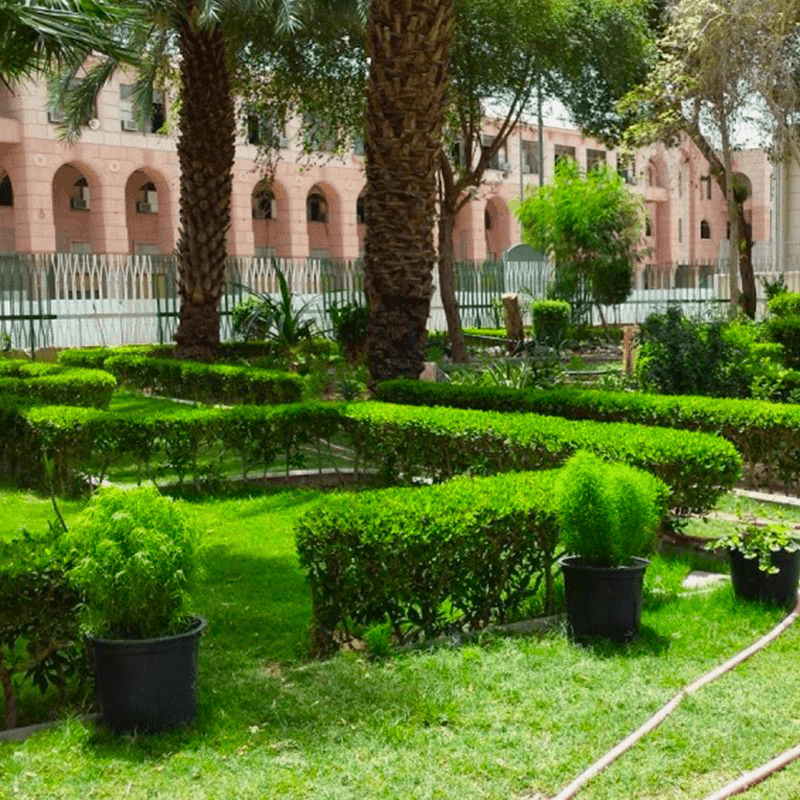
4 kmThe date farm where the Prophet planted three hundred palms with his own hands to buy Salman's freedom from slavery. Palms still grow on the spot. A calm ten minutes near Quba.
41. Wadi Al-Aqiq, the Blessed Valley
6 kmThe Prophet said, you are in a blessed valley, about Al-Aqiq. There is now an official walking trail along the wadi. Go after Asr in the cooler months and walk for an hour.
42. Masjid Dhu Al-Hulayfah, Abyar Ali
9 kmThe miqat for anyone leaving Madinah for umrah. You enter ihram here and nowhere later. Changing rooms and showers on both sides, open all night. Our ziyarat taxi ends here when your next stop is Makkah.
43. Jabal Ayr
8 kmThe mountain on the southern edge of the city, the opposite boundary of the sacred area to Uhud. The Prophet said Uhud loves us and Ayr does not. See it from the road. Nobody climbs it and there is no reason to.
How many days you need
You need three days in Madinah to cover the main ziyarat sites without rushing, and five days to see all 43 in this guide. Two days is enough for the mosque and the sites closest to it. The first day needs no transport, because the centre is walkable with wide pedestrian zones around the mosque. Everything else works as half day loops by car.
| Days in Madinah | What fits |
|---|---|
| 2 days | Sites 1 to 6, Qiblatain, the Seven Mosques and Uhud |
| 3 days | Sites 1 to 23, plus the dates market and one museum |
| 5 days | All 43, with a repeat visit to Quba on Saturday and unhurried prayer in the mosque |
November to March is the best time to visit, because daytime temperatures stay below 30°C and the walk between sites is pleasant. From May to September do every outdoor stop before nine in the morning or after Asr.
Between the ziyarat, three city stops earn their place. The Hejaz Railway Museum, in the old Anbariya station next to Al-Suqya, covers the Ottoman line that ran from Damascus to Madinah from 1908 until the First World War. Dar Al Madinah Museum, out in Knowledge Economic City, uses interactive displays and scale models to show the city's history from before Islam to today, and it makes every site above easier to understand. Al Noor Mall on Sultanah Road is the largest shopping centre near Masjid Nabawi, with prayer rooms on every floor, useful for the hot hours after Dhuhr. On the way back, the covered dates market near the mosque sells Ajwa and Sukkari by the kilo, and vacuum packed boxes travel best.
Dress modestly everywhere, not only in the mosque. Long sleeves and loose clothing for men, and an abaya with a head cover for women, will save you being turned away at the Uhud cemetery gate. Non Muslims can now enter most of Madinah, but not the Prophet's Mosque or the streets immediately around it.
Our Madinah ziyarat taxi
Our standard Madinah ziyarat loop covers Quba, Qiblatain, the Seven Mosques, Uhud and the martyrs cemetery in about three hours, with a driver who waits at each stop. Families going on to Makkah can end the loop at the miqat at Abyar Ali. Full details and prices are on our Madinah ziyarat taxi package page.
If you want the lesser known mosques, the wells or Wadi Al-Aqiq added, tell us when you book. We will build the loop around your prayer times.
Build your own ziyarat, get a quote on WhatsApp
Tick the places you want, tell us your group, and the enquiry opens in WhatsApp ready to send. We reply with one fixed price for the whole tour, driver waiting at every stop.
Frequently Asked Questions
- How many Ziyarat are there in Madinah?
- Saudi sources recognise more than 40 ziyarat sites in Madinah, and this guide covers 43 of them. The essential ones are the Prophet's Mosque, Jannat al Baqi, Masjid Quba, Masjid al Qiblatain, the Seven Mosques and Mount Uhud. Most pilgrims with two or three days see those six. The rest are smaller mosques, wells and battlefield sites that suit a longer stay.
- What are the top 10 Ziyarat places in Madinah?
- The top ten are Masjid Nabawi, the Rawdah, the Prophet's Sacred Chamber, Jannat al Baqi, Masjid Quba, Masjid Al-Jumu'ah, Masjid Al-Ghamama, Masjid al Qiblatain, the Seven Mosques and Mount Uhud with the martyrs cemetery. Five are on foot from the mosque. The other five fit into two short car loops, one south and one north.
- Which is the most special place of Madinah?
- The Rawdah inside Masjid Nabawi is the most special place in the city. The Prophet ﷺ described the area between his pulpit and his house as a garden from Paradise. It is marked by a green carpet and entry is by booked slot only. You reserve your time through the Nusuk app, and slots in Ramadan go within days.
- What is Madinah famous for?
- Madinah is famous as the city of the Prophet ﷺ and the place where the first Islamic community formed after the Hijrah in 622 CE. It holds his grave, the first mosque built in Islam and the battlefields of Uhud and the Trench. It is also known for Ajwa dates and for a calmer, quieter atmosphere than Makkah.
- What are some of the best things to do in Medina?
- Pray in Masjid Nabawi at night, visit Quba on a Saturday morning, and stand on the archers' hill at Uhud. Then give a morning to Dar Al Madinah Museum and the Hejaz Railway Museum. Finish at the dates market, where Ajwa and Sukkari are sold by the kilo. Everything except the lesser known wells fits into three days.
- Is Medina, Saudi Arabia worth visiting?
- Yes, and most pilgrims say they wish they had stayed longer. Madinah is the second holiest city in Islam and far calmer than Makkah, with a walkable centre and sites that carry the earliest history of Islam. Plan two to five days. Two covers the essentials, and five lets you see all 43 sites without rushing.
- What are the top 3 tourist attractions in Saudi Arabia?
- For Muslim visitors the top three are Masjid al Haram in Makkah, Masjid Nabawi in Madinah, and Masjid Quba, the first mosque in Islam. For wider travel, Al Ula, the Red Sea coast at Jeddah and Diriyah in Riyadh are the most visited. Madinah sits three hours from Al Ula by road, so both fit one trip.
Getting between the sites
The centre is on foot, but Quba, Qiblatain, the Trench and Uhud lie in three different directions and street taxis eat the prayer time you came for. Hujjaj Umrah Taxi, part of Al Harbi Transport, runs the Madinah ziyarat taxi loop with a driver who waits at every stop. If you land at Madinah airport or arrive from Makkah, the same booking covers the transfer and the ziyarat days.